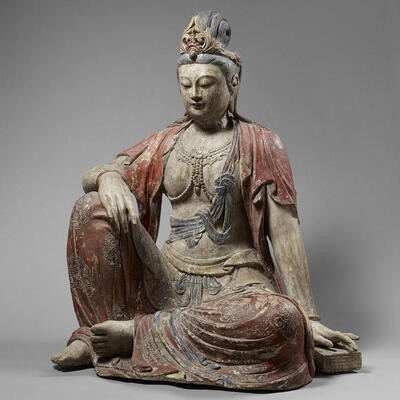
#buddhism
104 posts · Last used 15d

-
Finished writing a Storyworth memoir for my kids after a year's work. I can't wait for them to read it!
-
Attended my first Beloved Community Circles cohort training. I met empathetic people from around the world in this engaged Buddhism project. Groups take action to benefit their local communities.
-
Took two long walks on a beautiful autumn night, and heard Great Blue Herons talking with each other.

Boosted by @Dragofix@veganism.social
“All beings tremble before danger; all fear death… life is dear to all. When we consider this, we do not kill or cause to kill.”
- The Dhammapada
Buddhist Teachings On Eating Animal Products... https://pathlesspilgrim.medium.com/why-true-buddhism-is-vegan-988144a15037?sk=228e4bda7de2e33405da385da0c54b42
#Veganism #Buddhism

#3GoodThings #ThreeGoodThings
So glad I revisited/opened my Plum Village app tonight. Feelings of calm. Listening to Thich Nhat Hanh speak. Tonight's Title: Have I Got A Home?
Blackberry Citrus Fresca. Zero calories. Plenty of fizzy flavor. Water.
Bed. Blankets. Nighttime. May be my favorite.
#buddhism#breathe

"People of this world are deluded. They’re always longing for something-always, in a word, seeking. But the wise wake up. They choose reason over custom. They fix their minds on the sublime and let their bodies change with the seasons. All phenomena are empty. They contain nothing worth desiring."
– Bodhidharma
Daily #Zen #Buddhism #Bodhidharma
Among the dead, they do not die,
those who, like fellow travelers on the road,
#Buddhism #Theravada #Dhamma #giving #generosity #sutta

For when, with irreversible intent,
The mind embraces bodhichitta,
Willing to set free the endless multitudes of beings,
In that instant, from that moment on,
A great and unremitting stream,
A strength of wholesome merit,
Even during sleep and inattention,
Rises equal to the vastness of the sky.
Śāntideva. The Way of the Bodhisattva
#Buddhism #Bodhisattva #Dharma #Shantideva

Mariko Mori's Life in 5 Artworks
https://www.nytimes.com/2026/09/22/t-magazine/mariko-mori-art.html
#Art #Buddhism #Culture
Do not take lightly small good
deeds, believing they can hardly help:
For drops of water one by one
In time can fill a giant pot.
Patrul Rinpoche
#Buddhism

Before the cliffs I sat alone
the moon shone in the sky
but where a thousand shapes appeared its lantern cast no light the unobstructed spirit is clear
the empty cave is a mystery
a finger showed me the moon
the moon is the hub of the mind
Cold Mountain (Han Shan)
from "The Collected Songs
of Cold Mountain"
– Red Pine (tr.)
#tao
#zen
#poetry#hanshan#buddhism
"To be beautiful means to be yourself. You don’t need to be accepted by others. You need to accept yourself."
– Thich Thien-An
Daily #Zen #Buddhism #Thien-An #ThichThien-An
If we don't critically analyze things, we become lost in a world of make-believe that has very little correspondence with reality. Shantideva compares self-obsession and its attendant conflicting emotions to a demon:
"All the harm with which this world is rife, All fear and suffering that there is, Clinging to the "I" has caused it!
What am I to do with this great demon?!?"
The Buddhist definition of a
demon is something harmful.
"The Practice of LoJong"
–Traleg Kyabgon
#Lojong#Buddhism

Jigme Lingpa’s Yönten Dzöd: Part I
https://courses.yangtiyoga.com/courses/y%C3%B6nten-dz%C3%B6d-part1-2026
#buddhism #buddhist #vajrayana #dzogchen #atiyoga #meditation #TibetanBuddhism
"We are very happy to host a series of teachings by His Eminence Chung Tulku Rinpoche on Rigdzin Jigme Lingpa’s Yönten Dzöd, or Treasury of Precious Qualities. In this text, Jigme Lingpa (1730-1798) presents a progressive vision of the Buddhist path in accordance with the general view according to the Nyingma tradition. Over the course of thirteen chapters, Jigme Lingpa brings us from Sutra to Tantra to Dzogchen in a way that is clear, pithy and essential. This text provides a helpful grounding in both Sutra and Tantra including training in the importance of ethics and cultivating Bodhichitta - two very important aspects of the path that allow practitioners of higher teachings to properly hold the container of their experiences in a way that brings actual benefit for other beings in a skillful way. "


Naturally Liberating Whatever You Meet
https://courses.yangtiyoga.com/courses/naturally-liberating-whatever-you-meet-26
#buddhism #buddhist #vajrayana #TibetanBuddhism #dzogchen #atiyoga #meditation
"Join Lama Justin for this week-long teaching series on Khenpo Gangshar’s Dzogchen instructions known as Naturally Liberating Whatever You Meet. These instructions are profound, concise, and easy to put into practice. They can be considered stand-alone instructions, and also act as a helpful counter support for an existing trekchö or mahāmudrā practice."


Manzokuan: There is no one who is not the iron ox
https://manzokuan.blogspot.com/2026/07/there-is-no-one-who-is-not-iron-ox.html #buddhism
https://youtu.be/v6PSnatR6N8?si=yCzjz090am95L133
So appropriate to share on #socialmedia#buddhism #buddhist #Vajrayana
Reconnecting with Your True Nature: Beyond the Beautiful and the Ugly | Phakchok Rinpoche

'Evening Snowfall at Kiyomizudera Temple' by Kawase Hasui, 1950, Color woodblock print (#ukiyoe), #Japan.
#BuddhistArt #Buddhism

Replying to
@underzen@mastodon.social - Yeah, I get that. A lot of the "algorithmically optimized" Buddhist podcasts that I've encountered are either from a monastic perspective (so no kids) or from a secular-buddhist perspective which strips so much of Buddhism away that it starts entering into the "McMindfulness Industry" of commodifying Buddhism to serve a corporate mission. They often focus on "self help" as a way of coping with struggles and systemic issues.
You clarified that you weren't really interested in Buddhism resources for children specifically, but for those who are parents and have families, correct?
Lion's Roar is a solid resource. Here are several articles on parenting from a Buddhist perspective: https://www.lionsroar.com/?s=parent as an example. I've found looking for keywords such as "lay practitioner" in general and even "householder" in specific tends to bring resources for folks living "normal" or nonmonastic lives, often with children and families.
Lion's Roar has a series of podcasts as well: https://www.lionsroar.com/podcast/
Tricyle is another good resource, both as magazine and podcast. One of their podcasts is called "Life as it is" and tends to focus on applied Buddhism on every day life.
They have a lot of articles discussing families and parenting as well. Example search: https://tricycle.org/searchpage/?q=parent
The BCA has a lot of publications relating to the daily life of their members, many with families.
BCA Newsletters: https://www.buddhistchurchesofamerica.org/wheel-of-dharma
BCA National and Temple Podcasts: https://www.buddhistchurchesofamerica.org/podcasts
My own temple, Ekoji Buddhist Temple, has two podcasts. One called Echo Ekoji that is about temple members and family. And another called Dharma Breeze which is more formal instruction on Buddhism but specifically tailored towards lay folks and folks with families: https://www.youtube.com/@ekojibuddhisttemple/podcasts
So far as your theories about American Buddhists coming from beatniks and hippies, you are correct in that specific sphere. And much of the Buddhism that came from that area is now made popular. But family Buddhism and Buddhist sanghas that cater to families have been here long before the beatnik era. The BCA has roots from the late 1800's for example (both in Hawaii and on the West Coast of the US). There are similar sanghas in Canada as well, etc.
But! While those sanghas and traditions are old and fairly widespread, they have not been picked up in the corporate culture of many mainstream media forms.
Heck, many Buddhist centric publications have really only focused on Zen, Tibetan, and Theravadan traditions and haven't really focused on Pure Land or Mahayana traditions until fairly recently. Pure Land teachings and approaches often are preferred by many family and householder practitioners as they often are more approachable to those who are living life outside of monastic or individual-practice practices. (Edit to state clearly: many families in areas of the world that focus on Theravadan traditions absolutely live fully within those traditions. They have solid monk-to-householder relationships. We don't get that a lot in the US, so what comes over from the Theravadan traditions are generally the teachings that apply to the monks, not always how a family can implement or live within those teachings - again! Gross oversimplification but I wanted to touch upon it in a quick reply)
Dr. Gleig's book "American Dharma" dives into the why. She also sites other works in that book which do similar studies and inquiries into the current state of Buddhism in the US.
Anyhoo! All of that to say, that your expressed need of Buddhism as it relates to families and resources for that *do* exist. They just don't pop to the top of lists often for whatever reason.
#Buddhism
