On glacial lake outbursts from 2025
https://risingnepaldaily.com/news/65374
Begins with a list of then-recent events in Nepal. July 7 2025 also swept away the bridge before the big border building Nepal/Tibet we saw getting buried on Wednesday.
Then it summarises recent research.
But Wednesday was a mountain fall, no glacier collapse nor a lake.
Wednesday morning at 9am, a huge chunk of the mountain broke off and crashed into the valley 1km below. It pulled with it the glacier tongue. The ice melted on the way down.
This brand new article describes how scientists came to this conclusion
https://www.science.org/content/article/how-scientists-unraveled-cause-devastating-flood-tibet-and-nepal
"How scientists unraveled the cause of the devastating flood in Tibet and Nepal"
Judging form the first satellite images, they found the amount of vanished glacier ice wouldn't have been enough to cause the seismic disturbance of a 5.7mag quake.
Then a new set of images came online and made clear to the researchers that it was the mountain side that broke off. ' “The glacier just came along for the ride,” Ekström says. '
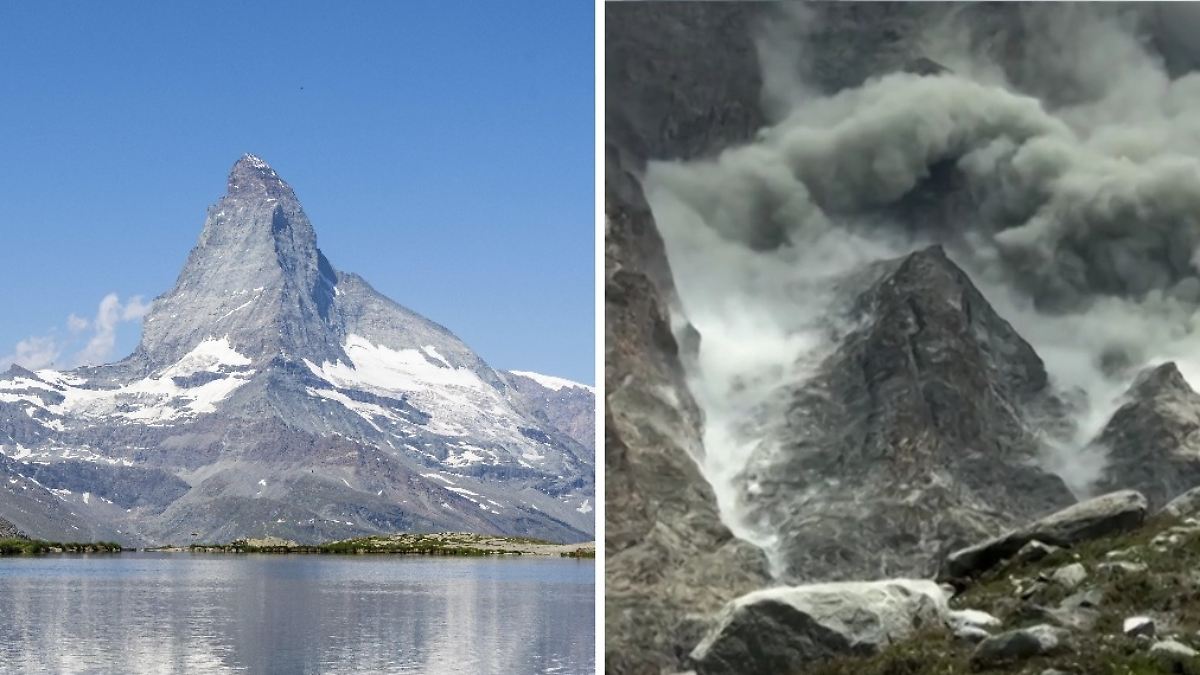
First the mountain 💣, then the glacier. That's also the sequence from Klein Nesthorn, Birch Glacier and Blatten in May 2025.
In mid May, first, a huge chunk from the mountain top broke off and fell on the Birch glacier. The sheer weight of the rock destabilised the glacier and increased its downflow speed. On May 28 2025, the glacier rushed into the Lötschtal and buried Blatten.
' Byers points a finger at the gradual thawing of high-altitude
#permafrost, which binds rock and ice together. Other researchers hope to assess whether snow melted in the days leading up to the event, causing water to seep into and destabilize the rock. Furthermore, if the glacier was buttressing the mountain, any melt could have removed an important support system. “Landslides have been occurring as long as the mountains have been building,” Ekström says. But “in areas where glaciers are disappearing, these landslides are occurring more frequently.” '
Daniel Swain in his live "pop-up-session" said, he found heavy rain events before Wednesday. RAIN. On high mountains…
***
When rain water fills rock fissures , the pressure from the water works like dynamite.
My takeaway: whatever the infamous anti-alarmism delayers tell me, like, how attribution to climate were impossible? I don't believe them. Ever.
#Nepal #flood #climateChange #ClimateAttribution